
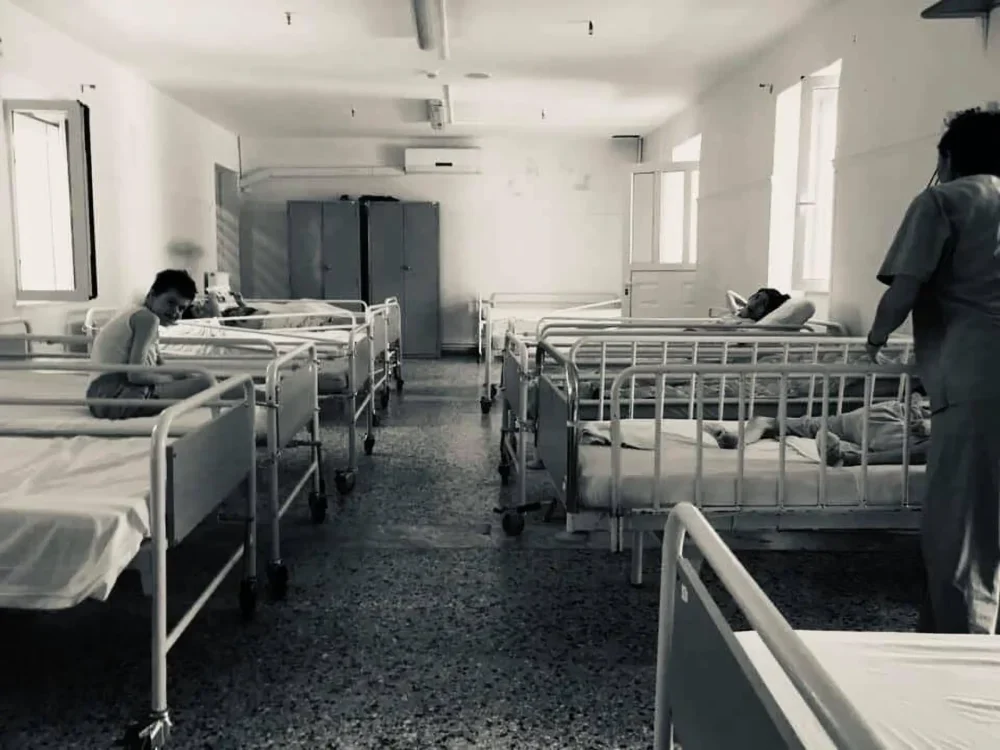
Part of the content is based on the article “The Invisible Children of Institutions,” published in the print edition of the newspaper “TA NEA,” which is further enriched here with additional analysis and commentary.
First Publication: 21/10/2023
Source: https://www.tanea.gr/print/2023/10/21/greece/ta-aorata-paidia-ton-idrymaton/
They were separated from their families at a very young age.
They were forced to grow up in institutional environments.
They were deprived of warmth and emotional security.
They often faced abuse.
These are the children of institutions.
And to a large extent, they are “invisible.”
Firstly, because many of them are not registered in the National Registry of Minors, making their exact number unknown.
Secondly, because “no system, institution, or authority truly ‘sees’ them,” as emphasized in TA NEA by Giorgos Nikolaidis, psychiatrist and Director of the Department of Mental Health and Social Welfare at the Institute of Child Health.
“These children become ‘invisible’ because once they enter a structure, it becomes extremely difficult to verify the conditions under which they are being raised,” notes lawyer Eleni Georgarou, President of the Network of Foster Parents and Volunteers for Community-Based Care.
 How many are there in Greece?
The competent Ministry of Social Cohesion and Family, UNICEF, and other organizations report different figures.
Many children live in residential structures that are not declared on the official state platform, making it impossible to accurately record them.
These may include unaccompanied refugee children, or children living in for-profit or church-run facilities that are neither declared nor supervised. In essence, their very existence is unknown.
According to UNICEF’s annual report, children living in child protection institutions represent 84% of children in need of protection.
But what does life in institutions mean for children?
Giorgos Nikolaidis is unequivocal in his assessment of how harmful institutionalization is for a child’s emotional, psychological, and cognitive development:
“We need to dispel a misconception. There are no good institutions. There are no non-abusive institutions for children. There is no institution—neither in Greece nor abroad—that does not harm children.”
He also emphasizes that institutional environments can cause irreversible damage:
“Especially for infants and newborns, it has been proven that these damages are irreversible. A baby or a child up to two years old growing up there will suffer brain damage solely due to that experience—damage that can be seen in an MRI scan.”
These findings have led the United Nations to issue a global call to ensure that no newborns, infants, or children under the age of four grow up in institutional care.
Moreover, the risk of abuse in such settings is extremely high:“A child placed in a child protection institution has an 85% chance of experiencing physical abuse from other children (which can occur within the first weeks) and a 25–30% chance of experiencing sexual abuse,” stresses Giorgos Nikolaidis